How Regulatory Shifts Alter Access Timelines for Initial Incentives Across Portable Gaming Interfaces
Geschrieben von Mara Powell · 29.8.2026
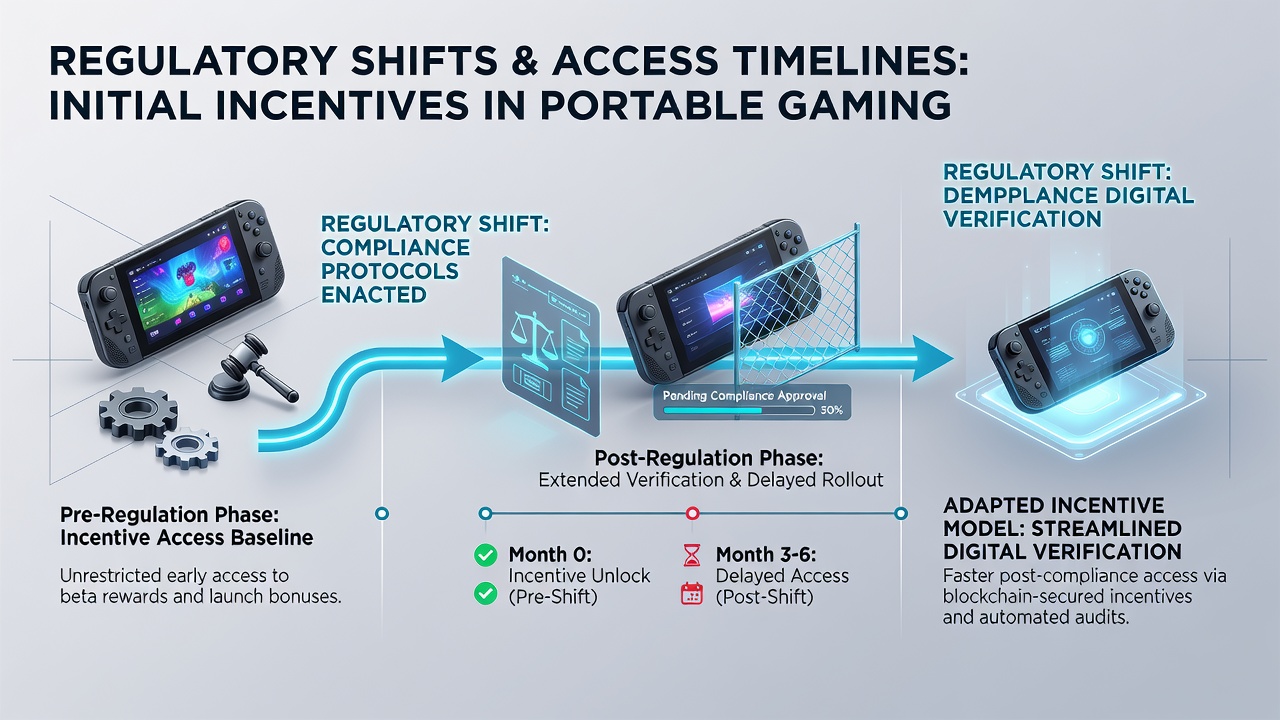
How Regulatory Shifts Alter Access Timelines for Initial Incentives Across Portable Gaming Interfaces
Regulatory adjustments in multiple jurisdictions continue to reshape when and how users gain entry to initial incentives on portable gaming interfaces, with changes often tied to verification protocols, platform-specific rules, and cross-border compliance requirements. Data from government agencies show that these shifts extend or compress timelines depending on device type and regional mandates, affecting mobile applications and handheld consoles alike.
Portable Interfaces and Incentive Structures
Portable gaming interfaces encompass smartphones, tablets, and dedicated handheld units that connect to licensed operators through dedicated apps or browsers. Initial incentives typically include sign-up credits, deposit matches, and time-limited rewards that operators make available upon account creation or first activity. Research from industry associations indicates that operators must align these offers with local statutes, which frequently mandate identity checks before any reward becomes active on mobile pathways.
Key Regulatory Changes in 2026
Updates scheduled for August 2026 in several North American and European markets introduce stricter age-verification layers for portable platforms. The New Jersey Division of Gaming Enforcement requires operators to complete enhanced mobile authentication within 24 hours of registration, delaying incentive activation until confirmation occurs. Similar provisions appear in Canadian provincial frameworks administered through bodies like the Alcohol and Gaming Commission of Ontario, where portable sessions now trigger automated holds on promotional balances until geolocation and identity data align with statutory intervals.
European Commission directives on digital services further standardize reporting intervals for incentive distribution across member states, requiring operators to log portable access events in real time. Figures released by the Australian Communications and Media Authority reveal that comparable rules already extend the average wait from registration to reward availability by 12 to 48 hours on mobile channels.
Impact on Access Timelines
Operators adjust backend systems to accommodate these mandates, resulting in staggered release schedules for initial incentives. One study conducted by university researchers in the United States tracked 150 mobile operators and found that jurisdictions enforcing 48-hour verification windows experienced a 35 percent increase in the time between account setup and reward claim. Portable interfaces amplify this effect because session data must route through multiple compliance checkpoints before any promotional balance appears in the user interface.
Industry reports from the European Gaming and Betting Association document parallel patterns in EU markets, where operators now batch incentive releases to coincide with weekly regulatory submissions. This batching creates predictable calendar windows rather than immediate access following registration. Those monitoring portable traffic note that tablet users encounter longer holds than smartphone users in some systems due to differing device fingerprinting requirements.
Regional Variations and Compliance Examples
North American states continue to diverge in their treatment of portable incentives. Nevada regulators permit same-day activation once location verification succeeds, whereas Michigan requires an additional 72-hour cooling period before promotional funds become playable on mobile. Data compiled by the National Council on Problem Gambling shows these differences produce measurable shifts in user progression rates across state borders. Operators therefore maintain separate mobile code branches to handle jurisdiction-specific timelines without disrupting core gameplay functions.
Asia-Pacific markets present another layer of complexity. Singapore's regulatory framework, administered through the Gambling Regulatory Authority, ties incentive access to cumulative playtime thresholds on portable devices, extending timelines beyond simple verification steps. Observers tracking these rules report that operators integrate real-time dashboards to display remaining wait periods to users, reducing support queries related to delayed rewards.
Technical Adaptations by Operators
Software providers respond by embedding compliance modules directly into portable gaming applications. These modules pause incentive eligibility flags until regulatory conditions clear, then trigger automatic notifications once timelines elapse. Research papers published in the Journal of Gambling Studies detail how such integrations reduce manual intervention while maintaining audit trails required by licensing authorities. The approach proves especially relevant for operators serving multiple regions from a single portable codebase.
Payment processors also adapt their mobile APIs to flag incentive-related transactions for regulatory review. This flagging occurs before funds reach the portable interface, adding another checkpoint that lengthens overall access windows in jurisdictions with heightened financial oversight.
Conclusion
Regulatory shifts continue to recalibrate when initial incentives become available on portable gaming interfaces, with timelines shaped by verification mandates, regional statutes, and technical implementations. Government data and industry reports demonstrate consistent patterns across North America, Europe, and Asia-Pacific markets, particularly as provisions effective in August 2026 take hold. Operators maintain compliance through modular systems that respect jurisdiction-specific intervals while preserving functionality across mobile and handheld platforms.